
Economic Trends in Nigeria’s Steel & Paper Industries: Opportunities and Challenges for 2026 and Beyond
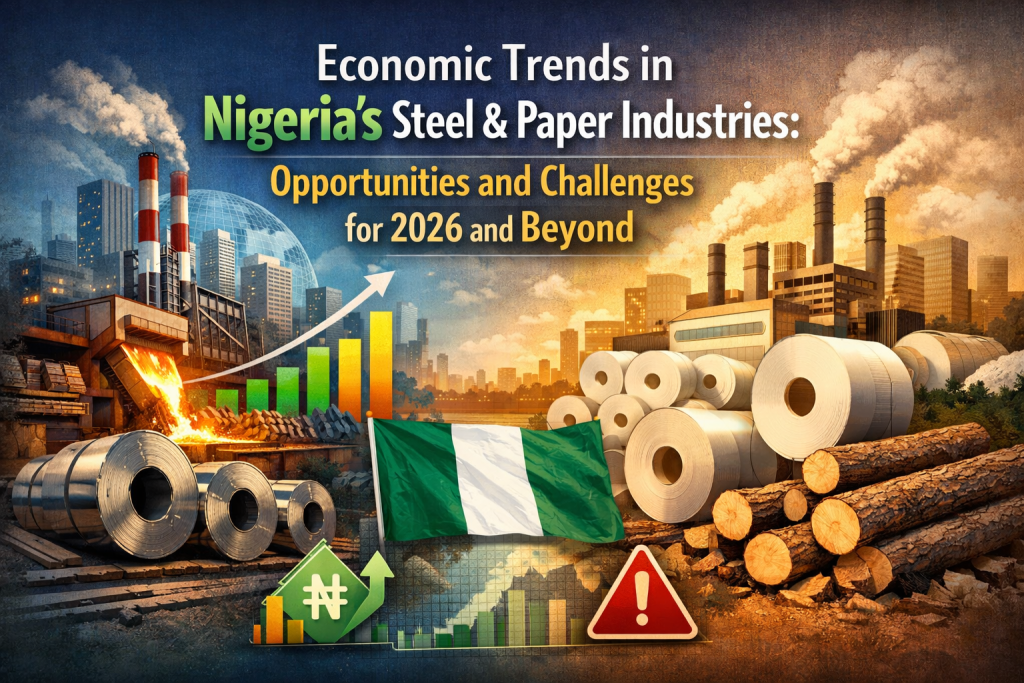
Nigeria’s manufacturing sector, especially steel and paper, plays a major role in reflecting the country’s overall economic strength and industrial competitiveness. These industries sit at the heart of critical sectors like construction, packaging, education, and manufacturing. As we move toward 2025 and the years beyond, a mix of opportunities and challenges will largely determine how well they perform.
Growth Potential Driven by Rising Demand
Steel Industry
Nigeria’s steel industry is gradually moving into a phase of expansion. With a fast growing population, increasing urbanization, and ongoing infrastructure projects across the country, demand for steel continues to rise. This demand is particularly strong in construction, automotive, and industrial manufacturing.
At the moment, a large portion of this demand is still met through imports, leaving a noticeable gap that local manufacturers could fill. Although domestic production is still below optimal levels, renewed efforts to revive major assets like the Ajaokuta Steel Complex offer hope. Plans to refurbish operations and attract foreign investment could significantly boost local capacity if fully realized.
Paper Industry
The paper and paperboard sector is also positioned for growth. Population growth and increased usage across packaging, printing, and education are driving demand. Industry projections suggest steady growth through the mid 2020s, provided local production capacity can be strengthened.
Despite this growing demand, local manufacturers currently meet only a small portion of Nigeria’s paper needs. More than 90 percent of paper products are still imported, placing heavy pressure on foreign exchange reserves and limiting the competitiveness of local producers.
Challenges Slowing Industrial Recovery
Policy and Economic Uncertainty
Policy inconsistency remains one of the biggest hurdles facing both industries. Frequent regulatory changes and slow implementation of industrial support policies have delayed the revival of key facilities and discouraged long term investment, especially in the steel sector.
At the same time, broader economic pressures such as high inflation, rising interest rates, and exchange rate volatility have increased production costs. These factors have squeezed profit margins and made it harder for manufacturers to operate sustainably.
Infrastructure and Energy Constraints
Poor infrastructure continues to weigh heavily on steel and paper manufacturers. Unreliable power supply, weak transport networks, and persistent logistics challenges increase operating costs and reduce competitiveness compared to imported products.
Many manufacturers still rely on self generated power, while inefficiencies in rail and port systems make distribution more expensive and time consuming.
Technology and Skills Gaps
Outdated equipment and limited adoption of modern technology have restricted productivity and quality improvements in local steel plants. Many facilities still operate with older systems that struggle to match global efficiency standards.
In the paper sector, years of underinvestment have left production capacity far behind demand. Scaling up will be difficult without fresh capital, modern machinery, and targeted technological upgrades.
Foreign Exchange Pressure
Fluctuating exchange rates continue to affect manufacturers across Nigeria. Since many inputs are imported, currency volatility drives up costs, making locally produced steel and paper less price competitive.
Opportunities for Growth and Competitive Advantage
Import Substitution and Local Value Creation
Reducing dependence on imports presents a major opportunity for Nigeria. Stronger local production of steel and paper would help conserve foreign exchange, create jobs, and deepen industrial linkages across the economy.
Expanding domestic paper production alone could save billions of naira annually while supporting related industries such as publishing, printing, and packaging.
Local Content and Supportive Policies
Policies that prioritize local content, encourage the use of domestically produced materials, and provide targeted incentives can help local manufacturers compete more effectively with imports. Measures such as selective tariffs, technology transfer support, and skills development initiatives could significantly accelerate growth.
Strategic Partnerships and Investment
Local manufacturing plants, especially in steel, stand to benefit from public private partnerships, foreign direct investment, and access to long term financing. These partnerships can help modernize facilities, expand capacity, and introduce global best practices.
Working with international partners also opens the door to new capital, technical expertise, and access to regional export markets.
Looking Ahead to 2026 and Beyond
The future of Nigeria’s steel and paper industries will depend largely on a few key factors. Consistent and well implemented policies will be critical. Improvements in infrastructure, particularly power and logistics, will determine cost efficiency. Access to capital and modern technology will shape productivity, while market strategies that encourage local production and consumption will support long term sustainability.
Nigeria’s ongoing economic reforms, including efforts to stabilize the financial system and improve exchange rate management, could strengthen investor confidence and create a more predictable business environment. Recent credit rating upgrades suggest that gradual macroeconomic stabilization is possible.
While the challenges remain real, strong domestic demand, a growing population, and targeted policy support provide a solid foundation for renewed investment and strategic growth in Nigeria’s steel and paper industries.
